
|

|
a Blog on Communal Music & Music-Making
|

|
In 2005 I was asked by the choral editor at Choristers Guild to provide two anthems based on particular scripture passages. Perusing a list of possible choices, I quickly found interest in setting the ideas from the 25th chapter of Matthew’s Gospel: “for I was hungry and you gave me food, I was thirsty and you gave me something to drink, I was a stranger and you welcomed me, I was naked and you gave me clothing, I was sick and you took care of me, I was in prison and you visited me” and “just as you did it to one of the least of these, you did it to me.” Inspiration from these passages resulted in: Whoever Welcomes You Welcomes Me – a composition consisting of four questions and a theological statement. Question #1: Where will we find you? Where will we find you, Christ, who is coming? Where will we welcome you? Where will you be? Will you be feasting with friends at a banquet, or will you hunger alone in the street? Where will we find you? Where will we welcome you? While writing this piece, I was cognizant of scriptural and experiential paradoxes related to how Christ is encountered. On one hand, the Gospels depict Jesus attending celebratory meals with friends, from the wedding banquet at Cana to breakfast by the Sea of Galilee. On the other hand, the Christ figure is portrayed in scripture as a stranger who is hungry and thirsty. For many years the congregation I serve as minister of music has fed the hungry and those experiencing homelessness. Witnessing the lines of people who come weekly for food and fellowship gave further instruction for this stanza and the next. Question #2: What will you look like? What will you look like, Christ, who is coming? What will we recognize? What will we see? Will you be wearing the finest apparel, or will we see you in rags and in need? What will you look like? What will we recognize? I sometimes compose texts or music in my head while driving. One day while driving and thinking on the words for this second stanza, I turned a corner into a McDonald’s drive-through. At that corner was a shabbily dressed woman inviting donations of money or food. Waiting in the car line for my own breakfast, I thought of the how her experience paralleled the teaching from Matthew 25, that she was the embodiment of Christ in need. Conversely, I also knew I had experienced the Christ-presence in persons of wealth and resources. These contrasting thoughts converged in this stanza. Question #3: When will you get here? When will you get here, Christ, who is coming? When will your advent be? Will you arrive when we're least expecting, or with fanfare and pageantry? When will it be? This crying out of “When (and how) will you get here?!” is expressed with a sudden change in the mood and music of the anthem. This portion of the piece takes on a frustrated tone as it continues to respond to scriptural discrepancies. The stories of Jesus riding into town with great pageantry, and the coming of Christ announced with celestial trumpets are found in the same Bible that reveals a Christ who arrives unexpectedly without preparation or fanfare. Question #4: Who will you visit? Who will you visit, Christ, who is coming? Who will you visit here? Who will you see? Will you be laughing and playing with children, or stay with prisoners who long to be free? Who will you visit? Who will you visit here? The beloved story of Jesus welcoming children and the teaching of the Christ being known in prisoners are both alluded to in this stanza describing diverse people in whom the divine is known. Another influence was the knowledge that my congregation includes persons who fight against the death penalty. Through the years this has included picketing outside of the state prison, visiting with death row inmates and holding congregational vigils before an execution. A line from this stanza originally expressed: “Will you be laughing and playing with children, or be a prisoner who longs to be free? Though I think this original line more closely communicates the teaching from Matthew of Christ being the prisoner, the publisher’s editors conversed with me about altering this line to the one above that is perhaps more poetic to sing. A Theological Statement And Jesus says: "Whoever welcomes you welcomes me, so, wherever you will go, I will be; and, whatever you look like, I will look like, too; I will speak in your words and in everything you do. Whenever – my advent is whenever – my advent is whenever you discover I am in you; when you discover I AM in you!" The beauty and strength of the Gospels is that they present different and even contradictory descriptions of Jesus. This understanding supports the anthem’s paradoxical questions: Does Christ feast at banquets or starve in the streets? Is Christ wealthy or in need? Does Christ visit children on the playground or prisoners in jail? The concluding theological statement seeks to affirm the Christ-presence in all of these and more. Taking Jesus’ statement from Matthew 10:40 (“Whoever welcomes you welcomes me”) to its ultimate conclusion, the final section exclaims that every person of every description speaks and acts as Christ. This reveals that the coming (advent) of Christ happens whenever humankind discovers their divinity within. A theological play-on-words in the last few lines reinforces this concept. It occurs when Jesus’ proclamation: “I am in you” is repeated but transformed into “I AM in you.” In all caps, “I AM” is a name for the divine found in the Hebrew Scriptures and expresses the divine in all. 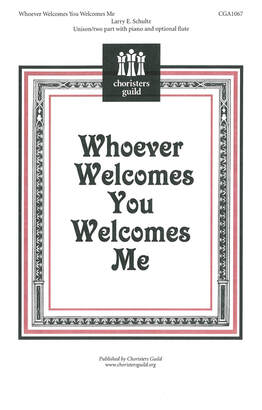 Whoever Welcomes You Welcomes Me is dedicated to my mother, Opal Lee Schultz, who was active in Woman’s Missionary Union, and involved me in missions education from an early age. That formative experience taught me that I was part of a global community and engaged my thinking on “who” was my neighbor, “what” they might look like, “when” I would encounter them, and “where” they might be. This anthem published by Choristers Guild (CGA1067) for unison or two-part voices with piano and optional flute accompaniment has been presented by choirs of all ages as well as vocal duets. The piece is meaningfully sung in the season of Advent or on any occasion when the divine is discovered. Whoever Welcomes You Welcomes Me is expressed by alto and tenor duet, piano and flute in worship at First Presbyterian Church, Ann Arbor, Michigan.
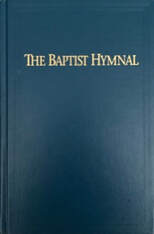
Before I knew it was one of the most historic and identifying characteristics of Baptists, my parents taught me what it meant to be a Separatist. In the mid-1970’s my family separated from our local Baptist church after it was strategically overtaken and controlled by a large group of new members who enforced outlandish theologies and unreasonable practices. This separation was not done lightly nor without grief as my parents had invested 30 years of their lives in this congregation. They made the decision to move from Tulsa’s Phoenix Avenue Baptist Church, to nearby Red Fork Baptist Church, in order to provide a positive experience for me as I entered junior high school. This change impacted my life for the better and demonstrated there would be occasions when being a Separatist was the best choice. As I grew and prepared for ministry, this understanding continued to guide my church and denominational life. The Southern Baptist Convention taught me what it meant to be Fundamentalist. In the 1980’s the SBC (a denomination whose history includes the endorsement of slavery) shamefully pronounced the inequality of women, the depravity of homosexuals and a disregard for Biblical scholarship. During this time, I was receiving excellent training for music ministry at Oklahoma Baptist University where I experienced the exact opposite: gifted women who were professors and church ministers, upstanding gay friends, and a responsible, thoughtful approach to the Bible. While continuing my education at The Southern Baptist Theological Seminary, I witnessed the Convention’s fundamentalist takeover that resulted in hurtful actions bombarded upon professors and students. In response, I wrote a hymn in 1988 that was published in The Baptist Hymnal, 1991: “O God, We Ask for Strength.” At best, the hymn was my protest; naively, I thought the SBC might sing its words and repent. But it didn’t work, and I became a Separatist again, not wanting to be associated with a denominational group that weaponized the Bible to harm and abuse others. The national Cooperative Baptist Fellowship taught me what it meant to be Moderate. In the year 2000, the national CBF Coordinating Council voted to affirm policies that would communicate a position of being “Welcoming but Not Affirming” of LGBTQIA+ people. (If that’s not a moderate stance, I don’ t know what is.) At the time I was the youngest member of the national CBF Coordinating Council, and after standing with those who opposed this position, I immediately resigned from the council, becoming a Separatist once again. Having lived through the exclusionary trauma of the SBC, and after giving much time and energy to both state and national CBF bodies, I was physically sick to experience the national CBF’s acts of oppression. (Because of Baptist polity I make a distinction between the actions of the “national” and “state” CBF organizations, as each body is autonomous). It was not lost to me that the CBF, an organization whose membership was comprised of outcasts from the SBC, was now continuing the same cycle of exclusion. I knew that some members would remain in an effort to bring about change from within, but I also knew that individual and institutional advancement would take time. After personally witnessing the deeply injurious actions of the SBC, I didn’t want to spend my time in ministry trying to convince another ecclesiastical organization that it should be inclusive. I simply did not have the patience or desire. The Alliance of Baptists, my church congregation and others are teaching me what it means to be Liberal and “beyond.” During my seminary years I heard about the formation of the Alliance of Baptists, and the first two churches I served were minimally associated with this fledgling Baptist network. After my resignation from CBF, I became much more involved in the Alliance and read in its newsletter about the search for a Minister of Music at Pullen Memorial Baptist Church, Raleigh, NC (which I became in 2001). I had previously learned about Pullen through national news articles that revealed the church’s commitment to fully include LGBTQUIA+ people. Because of this stance, in 1992 the SBC ousted Pullen from its membership, but a supportive community was already in place as five years earlier members of Pullen joined others in forming the Alliance. After becoming Pullen’s Minister of Music, I learned that the church never connected to the moderate CBF because it suspected from the beginning that the CBF would not be as open and inclusive as the Alliance. From my experience, this prediction was accurate. While no congregation or denominational organization is perfect, the liberalism expressed through Pullen and the Alliance of Baptists resonates with me and seems to have put an end to my Separatist ways. A liberalism that continues to progress encourages life-long learning, the willingness to venture out, and the equal willingness to change course as new wisdom emerges. Compared to the mental restraints of fundamentalism, progressive liberalism allows the freedom of inquiry essential for this post-theistic century. But liberalism also has limits. There are times when liberalism is inadequate and invites the search for what is “beyond." Perhaps even more descriptive for me than the term, “Liberal,” are words I suggested for a sanctuary art installation at Pullen: “Ever Embracing” and “Ever Becoming.” These active phrases express how I desire to be identified – “Ever Embracing,” as I participate with my church and other groups in welcoming and including all, and “Ever Becoming” as I evolve, explore new insights, and discover who continues to be excluded. Interestingly, it is by being a Separatist that I have been able in good conscience to remain both Christian and Baptist – two worlds in which I was born, have grown, was educated, and continue to offer my ministry of music. Songs Born Out of |
|||||||||
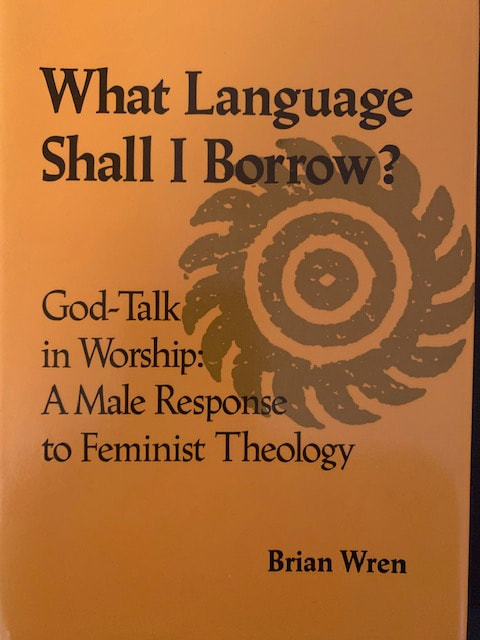 | 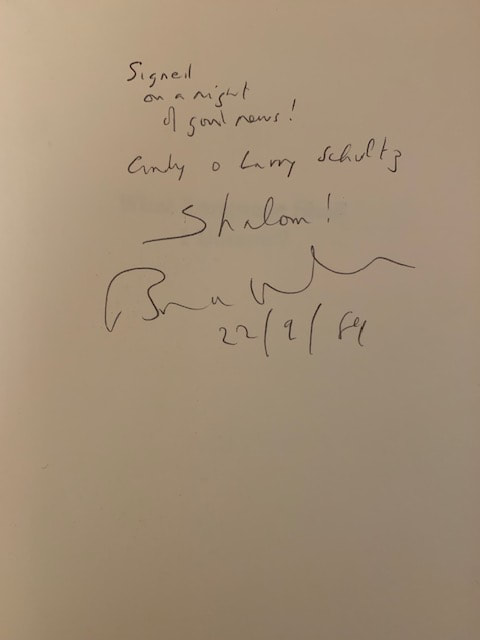 |
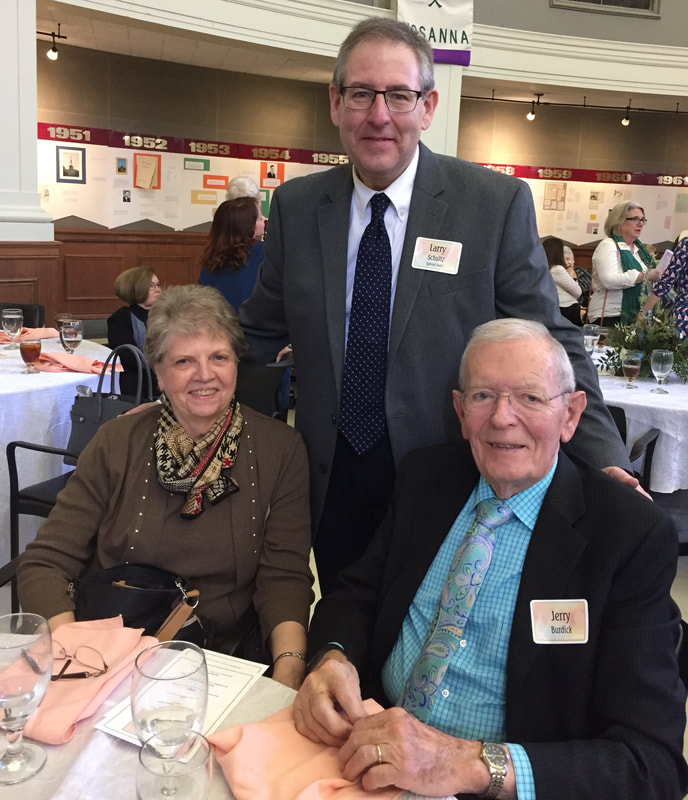
Dr. Wren inscribed the book’s flyleaf for me and my wife: “Signed on a night of good news! Cindy & Larry Schultz, Shalom! Brian Wren 22/9/89.” His inscription details memorable things about that night. The date commemorates that my wife and I had been married for just over 3 months, and this was the first professional event we eagerly attended as a married couple. An added joy for us was that the conference was held in the school’s music building connected to the seminary chapel where we had met three years earlier and where our wedding service had recently taken place. Wren’s “night of good news” inscription refers to the fact that when walking into the reception, my hymnology professor, Dr. Hugh McElrath, came to me to shake my hand and say: “Congratulations on your hymn making it into The Baptist Hymnal (1991)!” "What!" I joyfully exclaimed. (Dr. McElrath, who was on the hymnal’s committee, did not realize I had not yet heard that a hymn text I had written for his class[3] was going to be included.) Still on an emotional high from singing the hymns of Brian Wren, I was overjoyed to hear that my first hymn would be published. As news of this surprise spread around the room, the congratulations of many friends grew to become a large group hug that moved around the room reminding us of the last scene of The Mary Tyler Moore Show! With his congratulations, Dr. Wren also asked me to send him a copy of the hymn for review. As he traveled home following the conference, he kindly composed a letter of suggestions and encouragement regarding the hymn and my writing.
Everything about that evening was exciting and memorable. It was indeed a “night of good news” in many respects, including my awakening to the good news of feminist and intersecting theologies in my own ministry. This experience was foundational to my creative work that would follow, including my connection and collaboration with feminist theologian, Dr. Jann Aldredge-Clanton, which I celebrate in the next blog post.
Epilogue:
After my initial introduction to Brian Wren at the Southern Seminary conference, I was fortunate to learn from him at two other conferences during my early years in church music ministry.
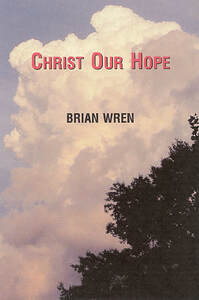
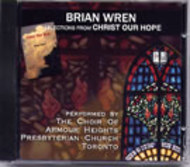
In 2003 it was a dream-come-true to have the opportunity to compose music for one of Brian Wren's hymn poems, "The Name We Have Begun to Know." My congregation, Pullen Memorial Baptist Church, Raleigh, NC, hosted Dr. Wren for a weekend conference and commissioned from him this interfaith text for which I provided the tune, LOVE-SONG. It is published by Hope Publishing in Wren's hymnal, Christ Our Hope, and was included in a recording of selected hymns from the collection.[4]
Everything about that evening was exciting and memorable. It was indeed a “night of good news” in many respects, including my awakening to the good news of feminist and intersecting theologies in my own ministry. This experience was foundational to my creative work that would follow, including my connection and collaboration with feminist theologian, Dr. Jann Aldredge-Clanton, which I celebrate in the next blog post.
Epilogue:
After my initial introduction to Brian Wren at the Southern Seminary conference, I was fortunate to learn from him at two other conferences during my early years in church music ministry.
In 2003 it was a dream-come-true to have the opportunity to compose music for one of Brian Wren's hymn poems, "The Name We Have Begun to Know." My congregation, Pullen Memorial Baptist Church, Raleigh, NC, hosted Dr. Wren for a weekend conference and commissioned from him this interfaith text for which I provided the tune, LOVE-SONG. It is published by Hope Publishing in Wren's hymnal, Christ Our Hope, and was included in a recording of selected hymns from the collection.[4]
Hymn Score and Tune Recording:

| The Name We Have Begun to Know - LOVE-SONG |
In 2011 I was thrilled to win a hymn tune contest sponsored by Faith Alive Christian Resources for Wren's text, "We Are Your People." The publisher coupled the text with my tune, SPIRIT-PRAYER, in the Lift Up Your Hearts hymnal, a joint publication of the Christian Reformed Church in North America and the Reformed Church in America.
Hymn Score and Tune Recording:
| We Are Your People - SPIRIT-PRAYER |
[1] Hope Publishing Company, 1989.
[2] Crossroad, 1989.
[3] “O God We Ask for Strength” (Hymn 498, The Baptist Hymnal, 1991).
[4] Selections from Christ Our Hope CD recorded by the choir of Armour Heights Presbyterian Church, Toronto, Ontario, Canada,
[2] Crossroad, 1989.
[3] “O God We Ask for Strength” (Hymn 498, The Baptist Hymnal, 1991).
[4] Selections from Christ Our Hope CD recorded by the choir of Armour Heights Presbyterian Church, Toronto, Ontario, Canada,
 |  |
Welcome to LarryESchultz.com and Resonate! – a site offering downloadable and published music for faith, school and community groups, and a blog that offers notes on the music and other items of interest related to communal music and music-making.
I describe my work as “communal,” because both my ministry and compositions seek to assist groups (choirs, congregations, orchestras, bands) whose individual participants make music together. I also use the word “communal” to communicate that all persons are musicians and are welcomed into the experience of music-making. It is a part of what makes us human, and is not an exclusive opportunity for the “trained.”
A seminary course on “The Philosophy of Music Ministry,” taught by gifted educator, Milburn Price, instilled within me the importance of developing and communicating a philosophy that supports and meaningfully directs my work. Though my initial philosophy of music ministry was bound to church history, church tradition and the Hebrew/Christian scriptures, it has evolved through the years to include more.
Ever since reading John Shelby Spong’s book, “A New Christianity for a New World,” I have been on a quest to provide a music ministry and creative works that break down religious and social barriers. Spong encourages all to walk so deeply through their own tradition and into their humanity that the tribalistic boundaries fall away. We then discover our connections with other people, and the oneness of all.
Like the efforts of present-day scientists who are seeking a “theory of everything,” I’ve been seeking such a theory related to communal music-making, and have borrowed three words that I hope for now succinctly state my ideas: Resonance, Transcendence and Relevance. So far, I find that these three words encompass the goals and outcomes of communal music-making, whether it be in church, other faith groups, school or community settings. (Though sometimes needed for clarity, I hesitate to use the words “sacred” or “secular” as I find them to be inadequate descriptions that can bring further division.) I’ll speak to Transcendence and Relevance in future posts, but want to briefly express my thinking on Resonance (and therefore, the name of this blog: Resonate!).
Though science cannot yet empirically prove it, “String Theory” as posited by quantum physicists is a beautiful description that I think can pertain to a philosophy of music-making and music ministry. String Theory suggests that the smallest elements of literally everything are tiny vibrating “strings.” Smaller than other sub-atomic particles, these vibrations make up all that is – from the computer keyboard on which I am typing to my own human cells. These vibrating strings may indeed turn out to be the common denominator of all things.
Not only are the smallest elements of life thought to be vibrations, but in 2003, astronomers discovered that a supermassive black hole in space was producing sound waves that created the deepest note yet detected from any object in the known universe!
Human biology and anthropology come in next. We humans have evolved with lungs to fill with air and a larynx through which to pass that air causing vibrations of sound. As humanity grew, we developed language out of that sound – words that convey meaning.
After considering all of this, I then am in awe, and wonder as I think: “If the tiniest quantum element as well as one of the largest known objects both vibrate with sound (music), and if humans ‘in the middle,’ also have the capacity to resonate sound…then there must be something very formational and primal to the experience of music-making. It must be foundational to our humanity, it must connect us with ‘everything,’ and there must then be benefits to music therapy, music ministry and communal music-making of any kind!”
I'm not alone in these scientific ponderings. I know of at least two other hymn writers, Brian Wren and Jann Aldredge-Clanton, who have included the specific idea of String Theory in hymns, and others like Shirley Murray and Thomas Troeger express ideas from science in their hymn poetry. I have connected scientific reality with faith-language metaphor in my hymn, Spirit of God, Spark of Creation.
When groups gather to make music, sound waves from one individual are produced and carried through the air until they are detected in the ear cells of other individuals. There is then an instant and physical connection! Music-making literally unifies and connects individuals into one community – a good foundation on which to build a more peaceful world. (For choral expressions that connect to this idea, see my compositions: Where Two or Three, May a Song Remain, Gathered Here to Share Our Music, Tear Down the Walls and others.)
And so, the name of this blog, Resonate!, refers to our human capacity to make music with all that is, and the exclamation point reminds us to do so with joy and energy. The name also reminds us that when we add words to our music, we can give emphasis and meaning to important ideas and philosophies with which we “resonate.” (Several congregational hymns I hope assist progressive communities in resonating their ideas are: We Are a People on a Journey, From Wisdom Emerging, and A Stranger, Starving on the Street).
Not all of the words to every composition I’ve written are as progressive as I’d desire them to be, but even these creations represent a part of my journey and can reveal an ever-evolving progression – one that continues and is life-long. I hope on this site you find a choral anthem, congregational hymn or instrumental selection that is useful in your community, and I look forward to offering additional works in the days to come.
I describe my work as “communal,” because both my ministry and compositions seek to assist groups (choirs, congregations, orchestras, bands) whose individual participants make music together. I also use the word “communal” to communicate that all persons are musicians and are welcomed into the experience of music-making. It is a part of what makes us human, and is not an exclusive opportunity for the “trained.”
A seminary course on “The Philosophy of Music Ministry,” taught by gifted educator, Milburn Price, instilled within me the importance of developing and communicating a philosophy that supports and meaningfully directs my work. Though my initial philosophy of music ministry was bound to church history, church tradition and the Hebrew/Christian scriptures, it has evolved through the years to include more.
Ever since reading John Shelby Spong’s book, “A New Christianity for a New World,” I have been on a quest to provide a music ministry and creative works that break down religious and social barriers. Spong encourages all to walk so deeply through their own tradition and into their humanity that the tribalistic boundaries fall away. We then discover our connections with other people, and the oneness of all.
Like the efforts of present-day scientists who are seeking a “theory of everything,” I’ve been seeking such a theory related to communal music-making, and have borrowed three words that I hope for now succinctly state my ideas: Resonance, Transcendence and Relevance. So far, I find that these three words encompass the goals and outcomes of communal music-making, whether it be in church, other faith groups, school or community settings. (Though sometimes needed for clarity, I hesitate to use the words “sacred” or “secular” as I find them to be inadequate descriptions that can bring further division.) I’ll speak to Transcendence and Relevance in future posts, but want to briefly express my thinking on Resonance (and therefore, the name of this blog: Resonate!).
Though science cannot yet empirically prove it, “String Theory” as posited by quantum physicists is a beautiful description that I think can pertain to a philosophy of music-making and music ministry. String Theory suggests that the smallest elements of literally everything are tiny vibrating “strings.” Smaller than other sub-atomic particles, these vibrations make up all that is – from the computer keyboard on which I am typing to my own human cells. These vibrating strings may indeed turn out to be the common denominator of all things.
Not only are the smallest elements of life thought to be vibrations, but in 2003, astronomers discovered that a supermassive black hole in space was producing sound waves that created the deepest note yet detected from any object in the known universe!
Human biology and anthropology come in next. We humans have evolved with lungs to fill with air and a larynx through which to pass that air causing vibrations of sound. As humanity grew, we developed language out of that sound – words that convey meaning.
After considering all of this, I then am in awe, and wonder as I think: “If the tiniest quantum element as well as one of the largest known objects both vibrate with sound (music), and if humans ‘in the middle,’ also have the capacity to resonate sound…then there must be something very formational and primal to the experience of music-making. It must be foundational to our humanity, it must connect us with ‘everything,’ and there must then be benefits to music therapy, music ministry and communal music-making of any kind!”
I'm not alone in these scientific ponderings. I know of at least two other hymn writers, Brian Wren and Jann Aldredge-Clanton, who have included the specific idea of String Theory in hymns, and others like Shirley Murray and Thomas Troeger express ideas from science in their hymn poetry. I have connected scientific reality with faith-language metaphor in my hymn, Spirit of God, Spark of Creation.
When groups gather to make music, sound waves from one individual are produced and carried through the air until they are detected in the ear cells of other individuals. There is then an instant and physical connection! Music-making literally unifies and connects individuals into one community – a good foundation on which to build a more peaceful world. (For choral expressions that connect to this idea, see my compositions: Where Two or Three, May a Song Remain, Gathered Here to Share Our Music, Tear Down the Walls and others.)
And so, the name of this blog, Resonate!, refers to our human capacity to make music with all that is, and the exclamation point reminds us to do so with joy and energy. The name also reminds us that when we add words to our music, we can give emphasis and meaning to important ideas and philosophies with which we “resonate.” (Several congregational hymns I hope assist progressive communities in resonating their ideas are: We Are a People on a Journey, From Wisdom Emerging, and A Stranger, Starving on the Street).
Not all of the words to every composition I’ve written are as progressive as I’d desire them to be, but even these creations represent a part of my journey and can reveal an ever-evolving progression – one that continues and is life-long. I hope on this site you find a choral anthem, congregational hymn or instrumental selection that is useful in your community, and I look forward to offering additional works in the days to come.
Author
Larry E. Schultz is a Minister of Music, composer, hymn writer and teacher.
Archives
July 2023
June 2023
May 2023
April 2023
March 2023
July 2021
January 2020
August 2019
Categories
All
Anthems
Baptism
Choral Music
Collaboration
Communion
Congregational Song
Education
Hymns
Interfaith
Music Ministry
Philosophy
Piano Music
Pluralism
Religion
Theology
Tribute
 RSS Feed