
LARRY E. SCHULTZ
  • Congregational Music
    • Downloadable Congregational Music >
      • Hymns
      • Songs
      • Collections
    • Published Congregational Music
    • Downloadable Hymn Enhancements
  • Choral Music
    • Downloadable Choral Music (Church) >
      • Anthems >
        • Unison, Two-Part & Mixed
        • SATB
      • Service Music
      • Hymn Enhancements
    • Published Choral Music (Church)
    • Downloadable Choral Music (School & Community) >
      • Unison, Two-Part & Mixed
      • SATB
    • Published Choral Music (School & Community)
    • Downloadable Vocal Exercises
  • Instrumental Music
    • Downloadable Instrumental Music (Church) >
      • Digital Recordings
      • Hymn Accompaniments
      • Hymn Obbligatos
    • Downloadable Instrumental Music (School & Community)
  • Vocal Solos/Duets
  • Music Instruction
    • Piano Lessons
    • Voice Lessons
    • Composition Lessons
    • Music Theory Instruction
    • Sight-Singing/Ear Training
    • Student Page
  • Resonate! (Blog)
  • About Larry
    • Minister
    • Composer
    • Hymn Writer
    • Teacher
    • Commissions, Awards & Collaborators
    • Music Typesetting
Picture
a Blog related to
​Communal Music

Sing of YOUR School!

7/22/2025

 
This blog post is third in a series focusing on music for school & community. 
In 2015 I was honored to be the first Composer-in-Residence for the historic Washington Elementary School in Raleigh, North Carolina. Washington was founded in 1923 as the first public African American Graded and High School in Raleigh. The school is now a diverse "gifted and talented" elementary magnet school in the Wake County Public School System. In 2023 and 2025, Washington was named top magnet elementary school in the country by the Magnet Schools of America. My friend, Bo Reece, was the school's long-time and beloved music teacher. ​
Picture
​I was commissioned to compose a flexibly-voiced school song with piano accompaniment and accessible parts for student orchestra and band. I began by getting to know the school through conversation with the students and faculty, asking them what makes their school special. I received hundreds of index cards on which they provided their responses. After reading them all, three things were clear: Washington Elementary, (and "school" in general) could be thought of as a place to be honored, a people who make a difference, and a time that's meaningful. These ideas gave form to the lyrics and inspired the music for the resulting piece: Sing of Our School. 
Picture
The premiere of Sing of Our School was performed by student and faculty choir with piano, student band and orchestra. Providing a performance opportunity for the entire school community, the piece works well for school commencements, graduations, anniversaries, or any time school is celebrated. 
2016 Premiere Performance
Bo Reece, Conductor
(video with lyrics below)
Picture
95th Anniversary T-Shirt
​with lyrics from Sing of Our School
Because the song offers alternative lyrics and a creative opportunity to include any school's name in the piece, it may be effectively expressed by any school. ​​
100th Anniversary performance
​by a select school choir
(includes lyrics in video)

Bethlehem and Santa Claus Are Busy!

7/16/2025

 
This is the second blog post that highlights music for school & community, though it also includes pieces for the church.
Picture
If you knew J. Paul Williams you are already smiling upon reading his name! You are remembering his unrelenting teasing and his signature Hawaiian shirts made by his wife, Donna. A constant jokester, I once saw Paul ride in a friend's car to a restaurant, then, giving silent commentary to her driving skills, quickly exited the car, got down on the ground and kissed the pavement! I have an array of envelopes from him addressed to me in various disparaging ways ("Horse Lips" was one of his favorites). The problem was that when most of these letters and packages were delivered, I lived in the small town of Walterboro, South Carolina. Paul's "creative" labels attached to my name were embarrassingly well-known among the staff in the town's only post office! His letters also always concluded with: "Hello to Cindy, who I like." I'm sure I am not the only "Horse Lips" out there, and I'm sure many other spouses were greeted in the same way at the end of letters. Paul brought much laughter into many lives!

In the 1970's I was introduced to the composing duo of "Paul and Donna Williams." I sang their choral pieces in my church's youth choir and was enthused by their music. During my freshman year at Oklahoma Baptist University I was excited to unexpectedly meet them in person during the university's 1982 homecoming. I quickly discovered that Paul and I shared much in common. Along with his being an OBU alumni and composer, we were both members of the university's Bison Glee Club, and were similarly influenced by Warren M. Angell, the club's founder and dean emeritus of the fine arts college. (Warren Angell is the subject of another blog post: In Gratitude for Warren M. Angell.)

After our first meeting, Paul and I kept in touch. In the early 1990's we both attended the Composer's Symposium at the Baptist Sunday School Board in Nashville, Tennessee. By this time, he had begun to focus more on lyric writing than composing. On the final day of that week-long event, Paul and I were asked by one of the editors from the Baptist publishing house to collaborate on a children's Christmas musical. Paul and I enjoyed creating Immanuel Will Come, for the Sunday School Board's "Children's Choir" curriculum (Van Ness Press, Inc., 1994). The musical includes seven pieces for unison/opt. two-part voices, accompanied by piano, Orff instruments, misc. percussion, and recorder.

Because he was also a composer, Paul wrote lyrics with solid structure that would easily assist the compositional process. This made my creative work enjoyable, and I remember the publisher's editor commenting that she "did not have to change one note" (a rare comment for composers to hear). Paul's humorous personality came through in the words to one of the Christmas musical's pieces: Busy Bethlehem. Paul ingeniously penned lyrics that imagined a hectic Bethlehem, full of hurried people who had come for the census. The resulting chaotic music of the piece mirrored Paul's ideas and included "chant" (rap) parts for soloists and choir.
Picture
Following our first publication, Paul sent me other texts to set musically. One day I received a call from him asking me to write music for a piece to be included in the Houston Children's Choir Series published by Fred Bock Music. Paul was writing all of the texts for this series, asking a variety of composers to collaborate. I was thrilled to be a part, and I understood completely why Paul thought of me when he sent his text: ​​Santa Claus Is Busy! With the success of "Busy Bethlehem," Paul decided to replicate the experience with his new lyrics about Santa Claus. We decided the new piece could also contain a choral chant/rap in the middle of the vocal sections. I included various percussion instruments to mimic the sounds of Santa's workshop as the children simultaneously chant two ostinato lines: 
​"Busy, busy, Santa Claus is
busy, busy, Santa Claus..."
​
"Santa Claus is busy!
Tell me, just how busy is he?"


Above the ostinati, soloists exclaim: 
"He's got to feed the reindeer
and hitch them to his sleigh.
He's got to get the map out
so he will know the way. 
He's got to file a flight plan
with the F.A.A.! 
Santa Claus is busy!
Busy night and day!"
​

 -Words by J. Paul Williams
© 1997 Fred Bock Music Company
Inspired by Paul's humor, my comical contribution to the piece was the suggestion that an audience member interrupts the seemingly endless cacophony by standing, raising their hand, clearing their throat, and asking: "Excuse me, just how busy is he?" -- to which the entire puzzled choir shouts back loudly: "He's BUSY!" 

Paul's fun lyrics and my music for two-part (or unison) voices with sleigh bells, misc. percussion, choral chant/rap, and audience member part, is published by Fred Bock Music. Santa Claus Is Busy! was recorded by the Houston Children's Chorus on it's live album: ​Christmas Is Here. I treasure a letter from Fred Bock himself who wrote: "I really like the piece!" ​
Picture
School or community children's choirs who wish to sing Santa Claus is Busy! this Christmas may find it through the Fred Bock Music Company or other music distributor. 

Though Paul passed in 2010, his inspirational and joyful life continues through  school, community, and church choirs that sing his words.​

A choral piece for churches 
​by J. Paul Williams & Larry E. Schultz:

The Sea of Galilee
(available on this site)
Picture
This church choir anthem for SATB voices and piano is a choral narrative of Mark 4:35-41. The introductory “soundscape” heard in the piano and voices aurally sets the scene for the dramatic story of Jesus and his disciples on the sea. ​

Music for School & Community: Fun with Flies

7/1/2025

 
While the majority of my choral compositions have been created for church, I have also enjoyed opportunities to compose music for school and community choirs, striving to offer educators useful materials that provide enjoyable and effective teaching opportunities. This is the first blog post among several that will highlight some of these creations.
Picture
One of my most widely-preformed pieces was conceived for elementary and middle school choirs. "Little Firefly" is a setting of an imaginative poem by Grace Lee Frank. It offers a number of choral technique opportunities (two-part harmony and vocal independence, staccato and legato singing, expressive diction). Because Ms. Frank's poem sings of a firefly that "carries a star," the piece also incorporates the familiar words and tune to "Twinkle, Twinkle, Little Star," (but instead of "like a star up in the sky," the children sing: "like a firefly in the sky!"). A performance suggestion invites the singers to use penlights during the performance to simulate fireflies that dance among the choir. The piece is dedicated to my daughter, Kelly, and we've been grateful to hear many expressive performances of this piece in concerts and festivals. It has even been creatively performed as a piece for two woodwinds and piano by music education majors in recital at Shenandoah University. Beyond the USA and Canada, it has also been presented by children's choirs in Europe, Asia, and Africa. It gives me joy to think a child on a playground in a far-away land may be humming a tune I composed. There's something deeply fulfilling about such a thought, reminding how the publication, distribution, and teaching of music can provide meaningful global connections.

performance of "Little Firefly" with penlights by Cantabile, Young Voices Toronto
Picture
Speaking of playgrounds, the "sequel" to "Little Firefly" was largely created while playing on a playground with my two children years ago. This was appropriate because, "Have You Ever Seen a House Fly?" is a playful piece for elementary and middle-schoolers. At the playground we brainstormed some of the play-on-words lyrics that ended up in the composition. Dedicated in "smiling memory" of my maternal grandfather who enjoyed joke telling, "Have You Ever Seen a House Fly?" is also dedicated to the Wake County Elementary Honors Chorus that premiered it the year I was its guest conductor. The piece sings of "horseflies" and "horses that fly," "houseflies" and "houses that fly," and so on. In trying to imagine "fruits that fly," my son, Ryan, came up with the idea of a "banana half-moon" and instantly became co-lyricist. Even the names printed on the publication are "play-on-words." My composer name listed is "Larry E. Schultz," but I used my full name as lyricist: "Lawrence E. Schultz." I did that because my son's middle name is also "Lawrence," so his lyricist credit underneath mine is: "Ryan Lawrence Schultz." To top it off, the dedication line identifies my grandfather: "Lawrence M. Yarbrough!" I imagine all of the various "Lawrences" give those who see the printed page cause to scratch their heads in wonder! I decided to replicate ideas from the creation of "Little Firefly" in this piece by combining a familiar folk song, "Shoo Fly! Don't Bother Me!" with the song's tune and by providing a performance idea. This idea involves placards on poles designed to picture the various "flies" in the song.  At the appropriate time, the placards are lifted high to fly over the choir, allowing the audience to visualize the fun text. Along with the placards, a literal shoe attached to a tall pole is also suggested to represent the "shoe fly." One of the best laughs I've received from a song I've composed is seeing a community children's choir sing this piece in a magnificent cathedral where a young boy was waving a shoe on a tall stick in front of the ornate high altar! I doubt anything of the sort had ever been experienced in that space! Perhaps music-making like this reminds us to put life in perspective and remember to laugh.

performance of "Have You Ever Seen a House Fly?" with placards (and shoe)
​by West Choir, South Hadley, MA, Children's Chorus
Both "Little Firefly" and "Have You Ever Seen a House Fly?" are published by Alliance Music Publications. I hope both pieces offer educational opportunities along with some fun with flies!

​Indeterminate Music in Worship

6/3/2025

 
As a Music Theory and Composition major in the Warren M. Angell College of Fine Arts at Oklahoma Baptist University I was privileged to study composition with gifted  composers, Nancy Hill Cobb and Michael Cox. They significantly expanded my musical horizons along with professors: Kathryne Timberlake, Bill Horton, Andre Lash, Wiff Rudd, Dan Hodges, and Bob Wood, who taught courses in Music Theory, Music History, Counterpoint, Orchestration, 20th Century and Electronic Music. Piano professor, Charlotte Martin, also focused my private instruction on my interest in composition and composers. Once, when I asked her to tell me about composer, Camille Saint-Saëns, she replied: "Well...he was my Godfather!" (Martin lived a fascinating life, and at one time was the youngest student of famous French pedagogue, Nadia Boulanger.) I received a magnificent education in Music Theory and Composition from these exceptional educators. Though my undergraduate degree was unusual for my career goal of church music ministry, its coursework has been invaluable to my creative and ministerial work. 

In a 20th Century Music course I was introduced to "aleatoric" or "indeterminate" music. This music results from compositions structured to utilize chance, randomness, improvisation, choices made by the performers, and other interactive factors. The outcome is that every performance of an indeterminate composition is unique. Often the musical score uses non-traditional notation to communicate the composer's creative desires. An assignment in this class was the composing of a simple piece incorporating aleatoric techniques. For this composition I borrowed an idea from my young niece, Carrie, after witnessing her do an interesting thing at the piano. She would locate the manufacturer's name on the inside of a piano's keyboard cover and trace her finger from each letter of the name downward toward the keyboard, playing a consistent rhythmic pattern on whatever black or white key was directly below each letter or symbol. I envisioned how playing in this way on pianos of different manufacturers would create a different result each time. For example, "Yamaha" would produce a different set of pitches than "Steinway." I was grateful to Carrie whose imagination provided this idea that helped me meet the indeterminate requirements of my assignment. I called the resulting piece: "Nomenclature." 
an indeterminate music composition by Larry E. Schultz
an indeterminate piece for piano: "Nomenclature," typeset on an early Macintosh computer.

Fascinated by indeterminate music, I wondered how I might one day make use of it in my work as a Minister of Music. When the 2020 pandemic silenced worshipers from singing and playing wind instruments in person, it was necessary to provide new and safe modes of music-making for congregational worship. During the pandemic, I led my gathered congregation to drum on the wood of pews, play body and rhythm instruments, hum in masks, and express worship through sign language. Remembering the indeterminate and electronic music I was exposed to in college, I created a congregational “Digital Gathering Song” with parts played by worshipers through their mobile phones. Offering the song in worship during the pandemic provided a safe way for worshipers to make music together. It also offers a means of congregational music-making for individuals reluctant to sing or who do not play an instrument.
 
Five different music files form the Digital Gathering Song and tonally complement each other. Fragments of the pentatonic tune, “HOLY MANNA,” associated with the text: “Brethren We Have Met to Worship,” are heard in a few of the files. As individual worshipers select specific files and play them simultaneously (pressing “play” at close yet random intervals), a unique indeterminate musical composition is heard resulting from various choices and chance as well as the particular acoustic environment. The digital music files can be placed on a page of the church or other website and accessed via Wi-Fi in the worship space. The webpage's URL and/or a QR code printed in a worship guide will provide worshipers easy connection to the files. A time of preparation is helpful to assist each congregant in pre-selecting a file with a title and mood that most closely represents how they are entering worship: with "joy," "concern," or a "mixture of feelings." 
 
Preceding the playing of the Digital Gathering Song, a Call to Worship exclaims that many different individuals from a variety of life-experiences gather to form one congregation. The Digital Gathering Song responds and musically expresses this reality as it combines the diverse sounds into one unique musical offering. As the digital song is played, individual worshipers hear how the music of others around them is either the same or different from their music, raising an important awareness that can provide an empathic and meaningful worship experience.  
​
Picture
Who Has Gathered? includes the Call to Worship and the five music files that create the Digital Gathering Song. It is available from LarryESchultz.com ​and may be effectively experienced in worship spaces, retreat settings, concert halls, and anywhere Wi-Fi is accessible.

Demonstration Video: 

In Gratitude for Warren M. Angell

5/13/2023

 
Picture
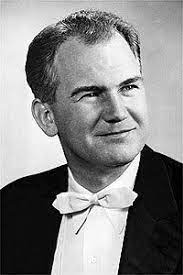
Driving a bright red sporty car, a New Yorker arrived at Oklahoma Baptist University in 1936 to become at the time the youngest college dean in America. In 1977, wearing a bright red jogging suit, he leaped onto the chancel in B.B. McKinney Chapel at Oklahoma’s Falls Creek Baptist Assembly. It was there I first experienced Warren Matthewson Angell, a whirlwind of a conductor, composer, and educator. Disregarding an age requirement, at age eleven I had sneaked into the chapel to sing in the Falls Creek Choir, not knowing my subversive act would introduce me to someone who would forever influence my life and work. I eagerly returned each summer to learn from him. With effective teaching, inspiring words and expressive conducting, he revealed to me the power and beauty of the choral music experience. He had been instrumental in developing the concepts and curricula for music ministry among Baptists, and I knew in those summers before college that I wanted to attend his college of fine arts.
Picture
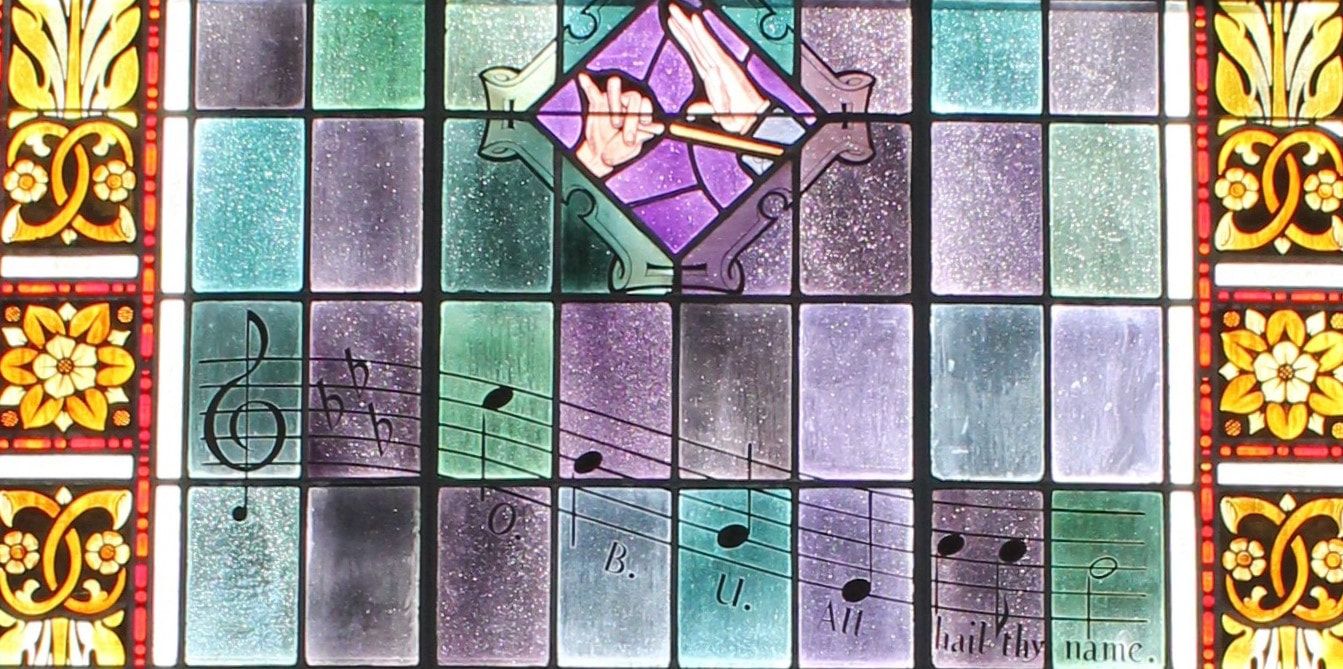
Warren Angell's conducting hands from the chapel window in Ford Music Hall, Oklahoma Baptist University, including a fragment from the tune he composed for the school's "Song to Alma Mater."

​​Though retired by the time I arrived at his namesake, “Warren M. Angell College of Fine Arts" at OBU, I was overjoyed during those years to develop a relationship with "Dean" Angell (as he was called even past retirement). In college I sang in the university's Bison Glee Club he founded, and was selected by him to sing in the Club's "Fallen Angells" Quartet which rehearsed in his home. I gleaned from his work by attending local choral workshops he led, and reveled in his storytelling during several dinner opportunities together. During a Bison Glee Club alumni tour to Hawaii, I was fortunate to be his roommate, providing an extended opportunity to pick his brain on all things church music. He attended my senior composition recital, and while in seminary, I was delighted to attend the university's celebration of his 50th year since arriving at OBU. When serving as a Minister of Music in South Carolina, I was thrilled to host him in concert and worship at two churches and visit him in his Black Mountain, North Carolina, home. Through the years we corresponded through postal mail where he continued to offer his advice and encouragement.
Picture
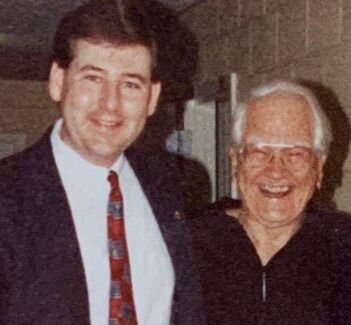
As a music theory and composition major I was keenly interested in Dean Angell's compositions, and we had discussions on the compositional process. He was a prolific composer and arranger of choral, congregational and keyboard music, and was known to dedicate some of his works to friends and students. In 1999, preparing to depart Greenwood, South Carolina, after visiting my family for what would be the last time, he said to me: "If there's anything I can ever do for you...." and, leaving his statement open-ended, I responded: "Just 16 bars!” Though the conversation went no further, he knew exactly what I meant, and several days later I received in the mail a composition for piano! The title was also the dedication:"16 Bars for Larry, Cindy, Kelly & Ryan." In addition to all I had learned and received from him since I was eleven, I was filled with gratitude that the 92-year-old composer had granted my wish!

​The piano piece (exactly 16 bars) is "classic Angell" in its melodic and harmonic expression. Knowing a bit about his creative process, it seems he conceived the rhythmic motion of the melody by mimicking the two-syllable names of each person in my family. Ever the educator, the final chord of the composition is indicated on the score by him as a "chime,” calling attention to the keyboard properties and harmonic structure he used to produce that particular effect. At the end of the hand-written manuscript dated 9-11-99, is a personal message, revealing the Dean’s characteristic sense of humor. The composition’s tempo marking includes the added instruction: “with feeling” - indicative of how Warren Angell approached music and life.
16 Bars for Larry, Cindy, Kelly & Ryan
Piano Composition by Warren Angell
Your browser does not support viewing this document. Click here to download the document.
​Music © 1999 Warren M. Angell.
Recording: 
​16 Bars for Larry, Cindy, Kelly & Ryan
Composed by Warren Angell
​Performed by Larry E. Schultz

​Many individuals, including myself, consider Warren Angell a mentor. His legacy continues in ministers of music, church musicians, educators, choral conductors, composers, and in persons in professions other than music. I'm thankful for his long and productive life (1907-2006) that brought instruction and inspiration to many!

​
In 2012, a text by my collaborator, Jann Aldredge-Clanton, seemed especially appropriate for me to compose as a choral anthem in memory of Dean Angell.​ Gathered Here to Share Our Music celebrates diverse humanity and the power of music that Warren Angell knew could transform the world.

An Interview of Warren Angell
Produced in 1987 by the Radio and Television Commission of the Southern Baptist Convention

A Tribute to an Influential Teacher

5/9/2023

 
In response to the news that my influential high school music teacher. Jerry Burdick, passed on May 8, 2023, I offer these memories in tribute.

First Meeting...
I first met Mr. Burdick in seventh grade when he came to Tulsa’s Clinton Junior High School and sat down beside me at the electric piano I was to play as a new member of the school’s jazz band. Never having played in a rhythm section before, I listened as Mr. Burdick patiently explained to me what it was to “comp” at the piano keyboard. The seeds of creativity he planted in that initial lesson would provide me with a love of playing in jazz bands through college and would later blossom to influence my work as a composer.

Learning from a Skilled Educator...
I entered Mr. Burdick’s marching band at Daniel Webster High School with several of my friends in ninth grade. Though our freshmen class was still housed at Clinton Junior High, we’d walk over to Webster on beautiful fall or cold winter mornings to learn from this master teacher. Throughout my high school experience in his marching, concert and jazz bands, Mr. Burdick exemplified the best in education and musicianship. It was his clear conducting technique I mimicked in my teenage church music jobs and upon entering Oklahoma Baptist University as a music major.

Many Valuable Lessons...
Not only did I learn to comp at the piano, effectively play my trumpet, and conduct from Mr. Burdick, but by example he taught unparalleled organizational skills, and what it meant to be an upstanding and caring citizen in the community. As an active and long-time church musician, his life of faith and concern for all people was evident. I also learned to value “quality over quantity” from Mr. Burdick. Though our high school marching band was the smallest in the city of Tulsa, it didn’t keep us from winning a city-wide marching band competition in spite of the twelve other bands that were two and three times our size. We won because Mr. Burdick inspired us individually and collectively to give our best, and we also won because of his forward-thinking creativity. Our show wowed the judges with rotating square formations and other new marching techniques of drum and bugle corps that had not yet spread throughout high school bands. This win was especially meaningful that year as, due to low enrollment, the possible closing of our high school was threatened. After the win a billboard proudly proclaimed our success to the entire city and in my estimation helped to keep our school open. Quality over quantity had prevailed and provided a valuable lesson for my work in church ministry.

Expanding Musical Horizons...
Mr. Burdick expanded my musical horizons in many ways, contributing to my work as a Minister of Music, composer, hymn writer and teacher. In the churches of my childhood, I mostly experienced the music of American gospel hymns, but in high school concert band, Mr. Burdick exposed my mind and ears to gifted composers from around the world including England’s Ralph Vaughan Williams and Gustav Holst. In high school I was so enthused by playing the band transcription of Holst’s The Planets, that I engaged in an individual study on Holst in college. This study was important to my theory and composition degree at Oklahoma Baptist University, and I was deeply honored when Mr. and Mrs. Burdick drove miles to attend my senior composition recital at OBU.

A Grateful Opportunity...
One often loses touch with high school teachers after graduation, but after graduating seminary and entering full-time music ministry, I was commissioned by my friends, the Burdick children, to write a composition for their father as a surprise to celebrate his 60th birthday and 30 years as Director of Music for Epworth United Methodist Church, Tulsa. I tried to “pull out all of the stops” for Mr. Burdick, demonstrating in the composition both the joy and skills of music-making he had instilled in me. I think of him each time I conduct a choir in singing the resulting psalm setting, Play Skillfully and Shout with Joy!

An Amazing Story...
Though I would hear about Mr. and Mrs. Burdick through the years from their children or other West Tulsans, I did eventually lose touch with their whereabouts. And my life’s work had taken me and my family to Raleigh, North Carolina. But eventually, I experienced an unbelievable reconnection…

My mother and father-in-law were exploring assisted living communities in the Charlotte, NC, area. One weekend my wife and I traveled to Charlotte to help with their search. While taking a tour of a facility, I noticed a piano, and commented that my mother-in-law was a fine pianist and would enjoy playing. The employee giving us the tour then said to me: “We also have a wonderful gentleman who comes once-a-week to play for the residents…His name is Jerry Burdick.” At that instant I let out the loudest “WHAT!!!” one can imagine! I then said: “Jerry Burdick is my beloved high school music teacher from Oklahoma!” The employee did not have to give his name, but I’m glad she did (along with his phone number)! The Burdicks were now in North Carolina! Immediately upon arriving back home I called the Burdicks to catch up and tell them this amazing story.

And there’s more… In 2018 I had the opportunity to compose We Are a People on a Journey for the 75th Anniversary of Myers Park Baptist Church in Charlotte. In January of that year, I would get to attend worship there for the premiere of the hymn. This provided the wonderful opportunity to see my influential high school teacher and his wife, as I spent time that weekend with Jerry and Phyllis in their beautiful home. But the best part was that the Burdicks accepted my invitation to join me at Myers Park for the premiere! This was truly a full-circle moment. As the church’s pianist improvised on my tune for the prelude that morning, I was transported back to seventh grade when Mr. Burdick taught me to improvise. As the brass quintet, timpani and pipe organ played the introduction to my hymn, I remembered how my musical horizons were expanded in Mr. Burdick’s band to be able to envision and compose such sounds. And as the choir and congregation sang, I gave gratitude for the influence and presence of the Burdicks on this special day.

Deep Gratitude...
I am not the only student shaped and inspired by Jerry Burdick. I join countless others in giving thanks for his life and meaningful work that continues to thrive in us all.
Picture
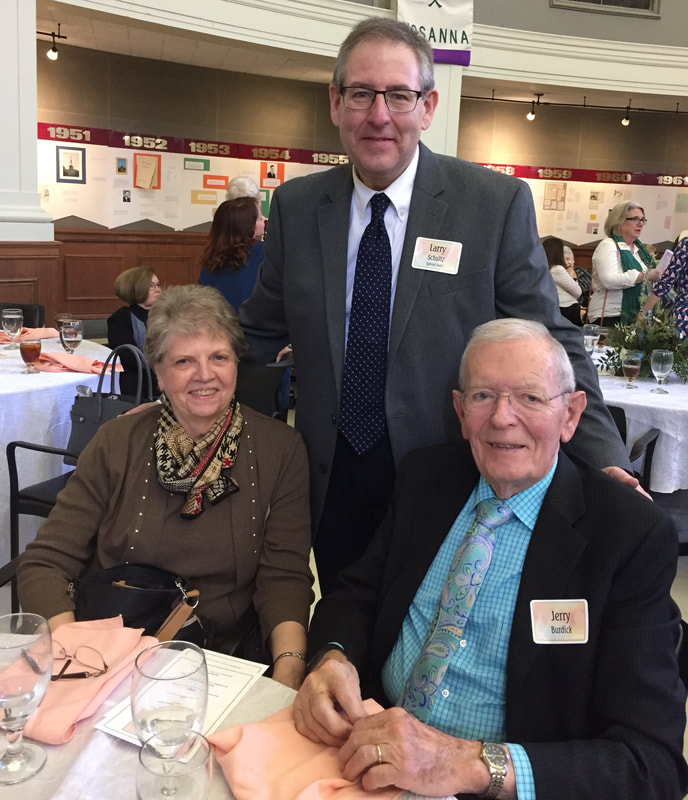
Phyllis Burdick, Larry E. Schultz & Jerry Burdick at Myers Park Baptist Church, Charlotte, North Carolina. January 21, 2018. 

    Author

    Larry E. Schultz is a Minister of Music, Composer, Hymn Writer, and Music Teacher.

    Archives

    July 2025
    June 2025
    April 2025
    July 2023
    June 2023
    May 2023
    April 2023
    March 2023
    July 2021
    January 2020
    August 2019

    Categories

    All
    Anthems
    Baptism
    Children's Choirs
    Choral Music
    Collaboration
    Communion
    Community Choirs
    Congregational Song
    Education
    Hymns
    Indeterminate Music
    Interfaith
    Middle School Choirs
    Music Ministry
    Music Notation
    Philosophy
    Piano Music
    Pluralism
    Religion
    School
    Science
    Technology
    Theology
    Tribute
    Worship

    RSS Feed

Copyright 2025 Larry E. Schultz. All rights reserved.
  • Congregational Music
    • Downloadable Congregational Music >
      • Hymns
      • Songs
      • Collections
    • Published Congregational Music
    • Downloadable Hymn Enhancements
  • Choral Music
    • Downloadable Choral Music (Church) >
      • Anthems >
        • Unison, Two-Part & Mixed
        • SATB
      • Service Music
      • Hymn Enhancements
    • Published Choral Music (Church)
    • Downloadable Choral Music (School & Community) >
      • Unison, Two-Part & Mixed
      • SATB
    • Published Choral Music (School & Community)
    • Downloadable Vocal Exercises
  • Instrumental Music
    • Downloadable Instrumental Music (Church) >
      • Digital Recordings
      • Hymn Accompaniments
      • Hymn Obbligatos
    • Downloadable Instrumental Music (School & Community)
  • Vocal Solos/Duets
  • Music Instruction
    • Piano Lessons
    • Voice Lessons
    • Composition Lessons
    • Music Theory Instruction
    • Sight-Singing/Ear Training
    • Student Page
  • Resonate! (Blog)
  • About Larry
    • Minister
    • Composer
    • Hymn Writer
    • Teacher
    • Commissions, Awards & Collaborators
    • Music Typesetting